Faith in the Mountains: A Visit to Sri Guru Pathar Sahib
Leh, Ladakh
Abijit Singh
9/1/20252 min read
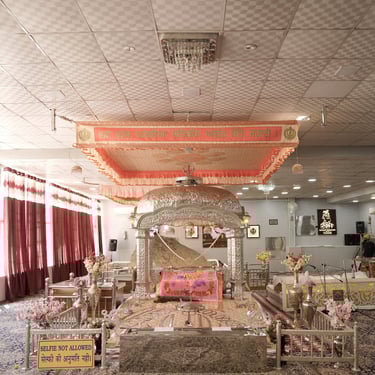
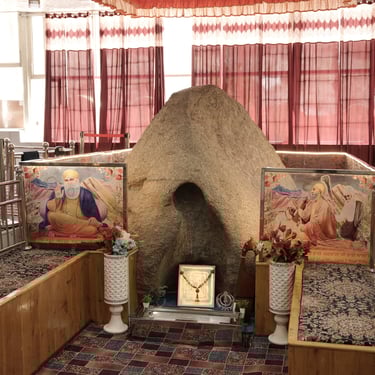
We arrived at Sri Guru Nanak Pathar Sahib. The setting of this Gurdwara was one of the most striking I’ve ever seen, nestled quietly among the dramatic mountains. We removed our shoes, and my fiancée and her friend covered themselves a little more before we stepped inside. After bowing before the Guru Granth Sahib, my eyes were immediately drawn to a large rock positioned just behind.
Curious, I walked around and read about its history:
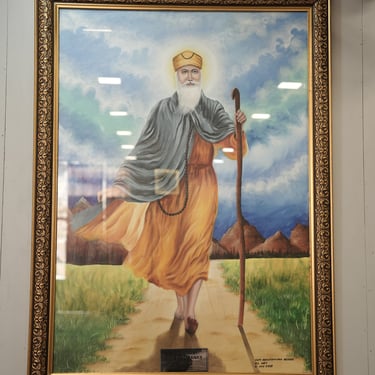
In 1517, Guru Nanak Dev Ji visited this spot during his travels in Ladakh. At the time, the area was troubled by a demon who tried to kill the Guru by rolling a massive boulder down onto him as he meditated. But when the rock touched Guru Nanak Dev Ji, it softened like wax, leaving the imprint of his body. Furious, the demon kicked the stone, only to have his own footprint etched into it. Realising Guru Nanak’s divine power, the demon repented.
Today, the sacred rock with these impressions is preserved behind the Guru Granth Sahib, and the site has become a place of deep reverence for Sikhs and travellers alike.
As I walked around, I noticed the outline of Guru Nanak Dev Ji’s form in the rock. “Wow,” I whispered to myself before taking Mattha once more in front of the structure. We sat in silence for a few minutes, taking in the atmosphere, before making our way to the Langar Hall. Just before entering, we spotted a gentleman recording himself—a travel vlogger. Curious, I approached him and asked for his channel name. He told me it was Vic Viajero, and that he was just starting out. I admired the enthusiasm, and judging by the firm handshake he gave me, I think he appreciated the fact that I asked.
We entered the Langar Hall and took our seats. There were no more than fifteen people inside. The men performing Seva were members of the Army. One detail that caught my attention was the way water was served. A large tank—holding more than twenty litres—was carefully maneuvered on a trolley. We were each given a cup, and one of the gentlemen instructed us to place it down. He pressed a button near the top of the tank, and water gracefully flowed through a small pipe at the bottom into our cups. It was such an ingenious yet simple concept—both amusing and heartwarming. After enjoying our Langar, we washed our plates and made our way out.
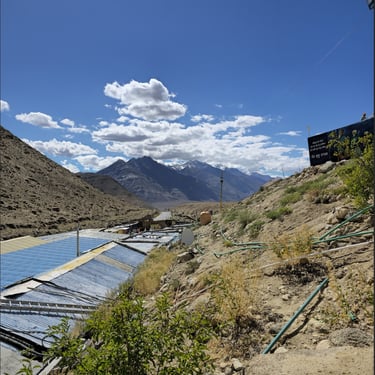
Just before we were leaving, we noticed a broad flight of steps leading further up the hillside to another tranquil prayer room. As we climbed, the scenery grew even more spectacular—wide mountain vistas stretched before us, and inscribed in bold white letters across on the mountain opposite us were “Chardi Kala” and “Dhan Guru Nanak Dev Ji.” - it was as though the mountain itself carried the blessing, echoing Guru Nanak’s message of optimism and faith. On that mountain more stairs stretched up towards the Nishan Sahib, the tall saffron flag that marks every Gurdwara, fluttering proudly against the crisp Ladakhi sky. I wanted to climb further, to stand beside it and take in the full sweep of the valley, but we were pressed for time. (Everyone else was just too lazy). We still had to collect my foreigner’s pass for Pangong Lake — and with a four-hour drive ahead, we had no choice but to move on.